If things aren't moving along the problem may be obvious… .. like our understanding of the relationship between the program, advancement, and positions of responsibility. The Scouting program is there, ready to go, but it can't go on it's own can it?
Thank you for your patience and support… … over the past several weeks I've been away. I'll explain the situation in the introduction to this week's podcast. In addition I'll spend some time addressing two major questions raised by a recent email question, can Scouters discipline Scouts for incidents outside of Scouting?
We hadn't gone more than a hundred yards or so when an enemy rose up in front of us and started spraying us with a Schmeizer machine gun or ‘burp gun' as we called them. We hit the ground and I, for one, just tried to get closer to the earth without returning fire immediately.
My son was frustrated, decided to change troops, and was elected senior patrol leader in his new troop. The Scoutmaster is a man of good intentions but with a commanding presence. Over time he has taken to leading himself because it's easier and less messy.
Some requirements, like First Class Rank Requirement 1a, can be confusing; Since joining, participate in 10 separate troop/patrol activities, six of which include overnight camping. These 10 activities do not include troop or patrol meetings. On at least five of the six campouts, spend the night in a tent that you pitch or other structure…
As a happy gear nerd I enjoy writing camping gear reviews once in awhile, especially when that gear stands the test of time. When I write about gear it's usually stuff I have used for at least a year or two, and often a decade or more.
I hope you had a great summer… The picture for this week's podcast is one of my favorite campsites on Proulx lake in Ontario Canada's Algonquin Provincial Park. We took twenty people in three crews this year and had a great time.
In an often pessimistic world Scouting's future is inherently optimistic. Scouting is greater than a hedge against the perilous future, or a return to a storied past. We typically associate the future with technological advances. While technology will have a big role in shaping our future there are, perhaps, greater factors to consider.
Scout camp is a privilege, an opportunity, and an obligation. We get just so many great good places in life, and one of my favorites is our Scout camp. The history, names, stories and traditions are specific to our camp, but they share common threads with every Scout camp.
If you have knowledge or skills you want to share with more than one person what happens next? If it's just three or four people we get them together and tell them. Easy, right? What if it's ten or twenty people?
Scouting is something Scouts do for themselves … … rather than a program of activities presented for them. This week I'll discuss the way Scouts should be engaged in leading one another, in making decisions affecting what they do and how it is done.
21 boys boarded a boat in Poole Harbor… … they had no way of knowing they were pioneering a movement for millions of young people around the world. Several lived well into old age to vividly recount their experiences decades later.
The Zeppelin bend is an easy, secure way of joining two lines. Where it really shines, though, is how easy it is to untie even after it has been under a heavy load. Also called a Rosendahl Bend after Commander of the Lakehurst, N.J.
You probably can't appreciate what your Scouting legacy will be a few years from now. Today you have your hands and your head full of getting things done; looking into the future may not be high priority. No matter how hopeful or difficult things may seem at the moment, no matter how well or poorly…
Scouting needs gardeners more than managers or officers. Scouting isn't the science of management or military discipline, it's much more like a garden. Gardeners prepare the ground, plant the seed, keep the weeds away, make sure there is plenty of water and sunshine and step back.
Are Scoutmaster's Conferences a retest? Can assistant Scoutmasters do them? This week we'll catch up on listener email by answering these questions and more. When it comes to Scoutmaster conferences they are explained unambiguously in teh Guide to Advancement, so n one of this is a matter of opinion or a difference in style, it…
No 11-year-old boy joins Scouting to get his character developed… … and few boys join to attend troop meetings, wear the Scout uniform, or sit before boards of review. Instead, they sign up for fun and adventure. Last month Walter Underwood joined me on podcast 313 to review the first volume of the Troop Leader Guidebook.
What is the ninth method of Scouting? Author Mark Ray begins the second volume of the Troop Leader Guidebook with these words; Back when you first attended Scout leader training, you learned that Boy Scouting has eight methods: adult association, advancement, ideals, leadership development, outdoors, patrol method, personal growth, and uniform.
What has a Mesoamerican Step Pyramid got to do with this? Today I want to talk about leadership, but I want to see if I can get you to come along with me and really examine what this means in Scouting.
Build from the Scouts out, not from the charts and syllabuses and manuals in. If you throw away all the resources and start from nothing you'd end up building a Scout patrol because it is designed around very intuitive things.
I want to share a great source for developing your skills! Outdoor leadership is different. What works at a Troop meeting or in the boardroom does not always translate well on a week-long backpacking or canoeing trip. Scouting offers great administrative training and valuable supplemental training in outdoor skills and safety.
How do I know what frustrates a youth leader? I have been guilty of each of these ten things at one time or another. People who volunteer to work with Scouts are generally good-hearted, well-meaning folks who want to do their best to guide Scouts towards growing into useful, good hearted people themselves.
Lots of answers that you may find useful! It's been a little while since I answered some email questions, so this is catch-up week. Listen as I talk about several different questions listeners have sent in over the past couple of moths, no doubt you have experienced something similar before, or may encounter these issues…
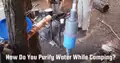
We'll purify many gallons of drinking and cooking water for three crews spending a week canoeing in Ontario's Algonquin Provincial Park this summer. Here's what I have learned about purifying water for a hundred or so Scouts and adults who have taken this trip over the past dozen years.
Have you seen the first volume of the Troop Leader Guidebook? Join Walter Underwood and myself as we review the first volume of the Troop Leader Guidebook. Like Walter I accumulated a collection of Scoutmaster Handbooks. From the very first edition to the last they were uniformly mediocre at best.
How about your Scouts? How about their parents? This podcast features advice for Scouters attending summer camp and parents who are staying home. I'll discuss ten things that will make life at summer camp smooth sailing for you and your Scouts, and also share some things parents can do to prepare their Scouts and themselves…
What constitutes a night of Scout camping? You'll find the qualifier "under the auspices of Scouting" or something similar in advancement requirements that describe nights of camping. What, exactly, does this mean? I'll give you my best answer to this and other email questions that we'll discuss in this podcast.
We work with our Scouts as they come to us…. I'll discuss two different parent-related issues in this third (and final) in a series of podcasts about Scout parents – First we'll acknowledge getting parents to understand the way advancement works can be a big challenge.
The single most important thing a Scout parents need to know is … This is the second of three podcasts about Scout parents. Scouting is not simply another activity on the schedule, it is a process. Once Scout parents understand the process they become allies, until they do we can find ourselves working at cross purposes.
What should Scout parents do if a child want's to quit Scouts?… This is the first of three podcasts about Scout parents. Just about every child will reach some impasse along the way that will make them reluctant or downright adamant about participating.
I am not thinking about the nature of Scouting activities… When Scouting is happening, when it's really popping and sizzling along, Scouts are doing things that few, if any of their peers are doing. I am not thinking about the nature of their activities, that's something we've discussed many times before, what I am thinking…
It's all about asking the right question… When it comes to Scouts planning activities there are two major threads of observations I hear about: They don't plan at all, they are incapable OR they plan the same things over and over.
This slide is based on an idea found in "Whittlin' Jim's" column in the December 1950 issue of Boy's Life . Check out my carrick bend infographic (part if the PDF package ) This neckerchief slide can be made from just about any straight-grained wood, the piece I use in the video is probably the smallest workable…
Author Sarah Kirkconnell ( Trailcooking.com ) has revised and expanded her excellent book Freezer Bag Cooking with the addition of many, many great new recipes. Freezer bag cooking is a simple technique that is perfect for Scouts, hot water is added to dry ingredients in freezer bag much like one adds hot water to a prepackaged freeze-dried…
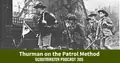
What Did John Thurman say to Patrol leaders? Richard Francis "John" Thurman (4 April 1911 – April 1985) became the third Camp Chief at Gilwell Park in 1943 and ably developed Gilwell Park and leader training for 26 years. Author of 15 books on Scouting He made a considerable impact on World Scouting and his influence…
Happy to announce today that my book So far, So Good! A a new Scoutmaster's Story is now available as an audio book. If you aren't familiar with the book it's the story of Chuck Grant's first few months as a new Scoutmaster.
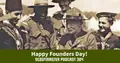
What do you know about Scouting's founder? February 22nd is founder's day, the birthday of Scouting's founder, born in 1857, 159 years ago, in Paddington, London, England World Thinking Day is celebrated annually on 22 February by all Girl Guides and Girl Scouts around the world.
No doubt – Scout leader training is invaluable, as are the selfless folks who volunteer to train their fellow Scouters (thank you if you do!) I recommend you take advantage of every training opportunity possible. Trained Scouters are more likely to do good, and less likely to do harm.
How do you decide who ends up in what patrol? Patrols are not about managing Scouts, they are not an artificial construct. If you look at patrols from the perspective of your Scouts there's the only thing that's actually important – and that's what we'll talk about on this podcast.
I'd like to share your Scouting story on the Scoutmaster Podcast, here's why and how; Why Share? Because your story will help other Scouters. We all share the same challenges and difficulties, the same accomplishments and victories. How did you work out a conflict, overcome an obstacle or resolve an argument?
How would you answer that question? Sure, we have the Scout law but would you add anything? Find out how one Eagle Scout just about to "age out" answered that question in this week's podcast. In This Podcast Intro [1:05 ] Chris M's Scout Law [6:45] Email question about Troop treasurer [9:45 ] This podcast is brought…
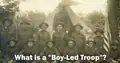
Many Scouters claim; "We have a boy-led (or youth-led, or Scout-led) Troop," but what does that really mean? Official literature mentions this sort of thing often , but how is do we really define "boy-led"? We'd like to think what the Scouts do and how they do it defines "boy-led", but it doesn't.
What's your vision for Scouting? Have you ever taken the time to really examine your Scouting vision, how you picture where you are headed as a Scouter? When I first became a Scoutmaster my vision was defined by what I knew at the time.
Anyone who takes on a position of responsibility as a leader will feel pretty self-important at first. After all, you have been chosen, or you stepped in when no one else did. It's a big ego boost to have a title, to have people follow your directions.
What works, what doesn't and what's new? The Scoutmaster blog started with it's first post in October of 2005, just over ten years ago (it's titled "Why Scouting?" ) The first podcast was published on January 25th 2010 – exactly five years ago today.
We tend to focus only on directive leadership roles when we are thinking about engaging our Scouts in leadership, but every Scout can (and ought to) be a leader. Here's some thoughts you can use to encourage all of your Scouts to engage in leadership.
Are you reactive (like me)? In this podcast I discuss patience and fortitude, two important character traits of successful Scouters. I'll also answer email questions concerning wearing more than one hat as a volunteer, job descriptions for Scouts, and how much Scouts should be expected to plan.
Do I need to get a new Scout Handbook? When do the new handbooks come out? Do we have to get them? When do we start using the new rank requirements, do they apply to every Scout? Answers to these questions and more in this week's podcast.
HalfEagle uses Google Analytics cookies to count visits to each page. Is that OK?