Small groups of Scouts, led by Scouts. The patrol method was one of the most talked-about ideas in troop leadership, and these posts work through patrol leaders' councils, patrol identity and letting youth lead.
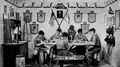
What does the Patrol System look like? If there was one tangible thing that you could look at and tell how well a Patrol is working, what would it be? The Patrol Flag? The uniform? No, there is something even better that requires the personal initiative of the whole Patrol: The Patrol Den.
For the last several years Boy Scout Troop 68 of Melrose was holding on to life with a small group of Scouts, only about 8 of them. The Cub Scout Pack has also had a rough time recruiting members which meant that the troop has only had 2 Webelos Scouts transfer to the troop during…
If you've been involved in Scouting for any length of time, you've probably heard the term “Patrol Spirit”. Simply put, Patrol Spirit is a culture of teamwork and camaraderie that develops among the members of a Patrol that is run according to the principles of the Patrol System.
I had an interesting Scouting discussion last night. A very well-intentioned someone was trying to explain to someone else how much the adult leaders should be involved in the different programs of Scouting. They said that for Venturing, the program is 75% youth led, Varsity is 50% youth led and Boy Scouts is maybe 25%…
Patrol leader training is not an event; it is an ongoing process of coaching and mentoring. Good coaching comes from a solid, simple, shared understanding of the fundamentals. To my mind a trained patrol leader knows these fundamentals. Here's how I train patrol leaders in fifteen minutes.
Patrols are much more than a convenient way to divide a large group of Scouts into smaller, more manageable groups. Patrols are the single unique feature of Scouting and the indispensable method for achieving the aims of Scouting. Most of became Scouters as Cub Leaders.
What separates a successful Boy Scout troop from a foundering one? The answer hasn't changed in a century. It's the patrol method, and it's been around since at least 1920 when Scouting founder Lord Baden-Powell explained it in his Aids to Scoutmastership (link opens PDF) .
Perhaps "Troop Program Death Spiral" is a gratuitously dramatic title but it describes something that does happen. Got your attention, though, didn't I? How and why do troops get off track and loose Scouts? There's a predictable sequence of events that spiral down into a crash.
Ok.. So to get back to the Future.. we need to focus on those basics that I referred to in the last post. I am going to, in the next few post expand on what I think we need to focus on.
Whether you're a new Scoutmaster or not, Working the Patrol Method – A Scout Leader's Guide To Youth Leadership Training is a MUST-READ for both alike! It's one of those "tools" you wish every Scoutmaster got when he accepted his role in a Unit (including me).
A new patrol leader may think, at first, their position is one of great power and authority. Truth be told patrol leaders do have great power and authority but it's not aimed at bossing people around or commanding their respect.
It has been an interesting week or so and the blog once again, while always on my mind took a back seat to the daily working of being a Scoutmaster. As we prepared for the camp out and then went out on another winter adventure the Scouts of Troop 664 kept me busy and looking…
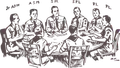
When we think about a patrol leader's council we form a picture of Scouts sitting around a table talking and making plans but what's really going on? The Senior patrol leader is in charge, the patrol leaders are assembled , the scribe is ready, the Scoutmaster is on hand to advise… what happens next?
Whether you’re a new Scoutmaster or not, Working the Patrol Method – A Scout Leader’s Guide To Youth Leadership Training is a MUST-READ for both alike! It’s one of those “tools” you wish every Scoutmaster got when he accepted his role in a Unit (including me).
The first post in this series about the patrol method paints a picture of the patrol as the central unit of Scouting, next we discussed the adult role followed by discussing the usual objections that arise when we put the patrol method into practice.
Our first post in this series establishes the patrol method as the character school of Scouting, that real self-government makes the Scout Oath and law more relevant than a bunch of concepts preached by adults. That Scouts find meaning in the life of the patrol and troop where individual responsibilities become group responsibilities.
Spent some time going over the Senior Patrol Leader Handbook this weekend. Along the same lines as the Patrol Leader Position Specific Training, I've gone through the SPL Handbook and outlined a training module for use with initial position specific …
Imagine a bus tour of some important city where, seated in the air-conditioned comfort of a motor coach, we listen to the guide explain each landmark in detail so we won't miss anything. The guide sticks to the script, we sit behind the tinted windows of our bus dutifully turning our heads to the left…
HalfEagle uses Google Analytics cookies to count visits to each page. Is that OK?