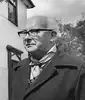
Because it’s FUN! As John Thurman so succinctly states: “Why Pioneering? To me the overriding reason for presenting Pioneering is that boys like it.” We know with certainty that the majority of Scouts do like pioneering, and the better they get at it, the more they like it.
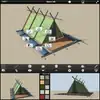
Most of the drawings on this blog have been created using SketchUp, a great, cheap 3d modeling program for Windows and Mac. There have been a few attempts to make an equally intuitive modeling app for tablets, and I think Autodesk have something very capable in their new app, Formit .
Timeless Attraction. The Mission and Purpose of the Boy Scouts of America are and shall forever remain unchanged. By the same token, the contribution that our heritage of outdoor skills makes to the richness of the Scouting experience is also unchangeable.
Water Knot The following text is by Adolph E. Peschke as presented in the 1998 printing of the 1993 edition of the Pioneering Merit Badge Pamphlet: Water Knot What could be simpler than tying two overhand knots to form a water knot?
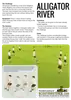
Give this pioneering-themed game a try. An alligator infested river, a few Scout staves and some ropes, one Scout must get across the river without feeding the alligators! Click the image to see full-sized alligator river game as a PDF file Alligator River Pioneering Game
At most Scouting events, there isn’t a permanently-installed, tall, metal pole for raising and lowering the colors. During opening ceremonies at these Scout gatherings, a tall flagpole made by joining long spars together can impress and inspire. Opening Ceremony at a District Camporee What is meant by tall?
Gateway to the Boy Scout Camp Pioneering Area Using the 14′ Double Ladder Signal Tower as a point of reference, here are the plans for a very tall campsite gateway that stands out (and up) and serves as an impressive feat of Scout engineering.
Double Platform Monkey Bridge It’s a pretty safe to say most Scouts love to climb things. So, it makes sense that if a monkey bridge is combined with something to climb on, it will be even more fun. The challenge in constructing a project like this is to assure the structure can safely support not…
The pipe hitch has a variety of uses, but it really comes in handy for pulling out those pioneering stakes that were driven in deeply to maximize the holding power of the anchors. Using the pipe hitch for this purpose can eliminate a good deal of straining, banging, and possible damage when it comes time…
Simple 1-1 Anchor with rope tackle We apply a rope tackle, (also known as the trucker’s hitch, lineman’s hitch, load binder, and harvester hitch) where the guy lines meet the anchors for pretty much all our pioneering projects. For safety reasons, taut-line hitches should never be used in any pioneering work, because if the tension…
When I was first learning my lashings, it always seemed that finishing them off gave me no end of trouble. It says in the book to secure with a Clove Hitch, but whenever I tried to tie a Clove Hitch the way the book described, it always ended up with too much slack and my…
Ah, the clove hitch. It’s a simple way to attach a rope to a pole, it’s side-to-side adjustable and is frequently used to start and finish a variety of lashings. Some folks don’t like it because in various applications, it’s not the most secure or reliable choice.
Each of these three lashings can be used to join two spars together to make an extension. With each there are no frapping turns. The manner in which these lashings need to be applied results in the spars being in a position where they are already tightly touching.
What one tool could help the adults end their losing ways? If anything can, it's The Boy Scout Handbook . For the first time this season, the adult challengers on Are You Tougher Than a Boy Scout? were shown with copies of the preeminent Scouting text before embarking on their first challenge against the Scouts.
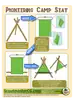
This infographic was generously provided by reader and listener Roger Thor Roop – Thank's Roger! Click the infographic to see full size. pioneering chair Pioneering Camp Seat Infographic
As always, in all Scouting activities, safety must come first. In and through the challenges, fun, and rewards that go hand in hand with Pioneering, there can be no substitute for prudent behavior and common sense. The following text is by Adolph E.
Our Favorite Clothing Rack Design You’ve got to love this design. It’s compact, it’s sturdy, and it’s ingenious! This drying rack is based on suspending two equilateral triangles to make six cross sections for hanging wet clothing or towels during a long term encampment, and there’s no reason you can’t put it up on an…
Rope Ladder Attached to a Tree The kind of rope ladder referred to here is constructed using two lengths of rope and short spars (3′ x 2″ are ideal) to serve as ladder rungs. To easily and effectively attach the rungs to the ropes, a marlin spike hitch, also known as a lever hitch can…
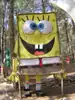
These incredible pioneering structures built by Israeli Scouts are a real inspiration( here's the website ). Obviously a lot of planning and modeling went into creating projects on this scale. It looks like a tremendous amount of fun doesn't it? I'll have to show my Scouts these pictures – who wouldn't want to build a giant Spongebob…
Whoever said "less is more" apparently hasn't watched Episode 2 of Are You Tougher Than a Boy Scout? Tonight's episode of the new National Geographic Channel show was, to me, superior to Episode 1 because it gave us more of what we Scouters and Scouts love about the Boy Scouts of America.
Team Building should be FUN! What we’re doing here is challenging each patrol to build a device that will set off and “catch” a cocked rat trap (the snapper) placed 15′ away. The lashings have to be tight and well-spaced.
The following text is by Adolph E. Peschke as presented in the 1998 printing of the 1993 edition of the Pioneering Merit Badge Pamphlet: Building this bridge is quite simple because there are very few lashings needed for the center A-frame.
Bridge Project built in Brazilian Boy Scout Camp Before we relate this interesting, real-life account, here’s a little about building bridges and Pioneering: To open up the frontier, pioneers built BRIDGES. To this day, the most familiar and most functional of all “larger” pioneering projects are bridges.
The following text is by Adolph E. Peschke as presented in the 1998 printing of the 1993 edition of the Pioneering Merit Badge Pamphlet: When you have to tie the ends of two large ropes (1/2″-diameter or larger) together, there is no better knot to use than the carrick bend.
Sure APPEARS to be manila! There was a volunteer who procured ten 50′ x 1/4″ packages of what was presented as 100% manila rope. He wanted to prepare the rope to be used for Scout pioneering projects and set about diligently pre-stretching each 50′ length, cutting each into various lengths for lashing, painstakingly applying a…
The following text is by Adolph E. Peschke as presented in the 1998 printing of the 1993 edition of the Pioneering Merit Badge Pamphlet: A trestle is the basic component for building a bridge in a pioneering project. It is used to support the walkways.
Using the 14′ Double Ladder Signal Tower as a point of reference, here are plans for a very tall campsite gateway that should stand out (and up) and serve as an impressive feat of Scout engineering. Since this 14′ structure won’t be climbed on, the spars can be considerably thinner in diameter.
The following text is by Adolph E. Peschke as presented in the 1998 printing of the 1993 edition of the Pioneering Merit Badge Pamphlet: Once you learn to tie and use the constrictor knot, you will wonder where it has been hiding in all those knot books and why it isn’t in wider use today.
It’s a race, but, you got to tie ‘em tight! The square lashing is the basic type of lashing for most pioneering projects. The more a Scout ties them, the more they become like second nature. That means, when the tying of an efficient and tight square lashing is “no sweat,” building a pioneering structure…
The challenge built into this activity comes into play after the lashing is finished. The patrol is simply building a very well-lashed A-frame. As with all pioneering endeavors, team work is essential. With this challenge, it’s absolutely necessary! Alligator Pit Materials for each patrol: 2 4″ x 8′ spars to serve as A-frame shear legs…
The following text and some of the drawings are by Adolph E. Peschke as presented in the 1998 printing of the 1993 edition of the Pioneering Merit Badge Pamphlet: We could imagine the first lashing made by man was wrapping a few strips of bark around a stone to hold it to a tree branch…
Larry Green (no relation) has an excellent website and blog on the subject of Scout Pioneering : My name is Larry Green and for over twenty years, I've been a student of the late, greatly-loved and widely admired Adolph Peschke, author of the (previous) Pioneering Merit Badge pamphlet, and the acknowledged designer of thirty original "boy-sized…
This is a simple and quick way to tie a tripod lashing. The wraps are not woven in and out between the spars. The running end is just simply wrapped around all three, rather tightly. Gerald Findley refers to this lashing as a Tripod Lashing with Plain Turns.
Everybody is on! Some years ago a newly-formed and very young troop, barely a year old, attended a Council-wide Camporee. One of the patrol competitions was an Everyone on the Tripod race. They entered three patrols. When the smoke cleared, and the judging was completed, out of over fifty patrols present at the camporee, they…
Richard Francis "John" Thurman (4 April 1911 – April 1985) was Camp Chief of Gilwell Park from 1943 to 1969. In 1943, he introduced the Gilwell woggle awarded on the completion of basic training, and the Gilwell scarf and the Wood Badge beads were awarded on the completion of Advanced Training.
Roundturn with Two Half Hitches The following text is by Adolph E. Peschke as presented in the 1998 printing of the 1993 edition of the Pioneering Merit Badge Pamphlet: This is one of the basic knots that is very reliable for a number of uses in pioneering work.
I've watched Scouts who struggle with the traditional square lashing (especially getting it tight enough) learn the Japanese square lashing quickly and go on to actually building stuff rather than fiddling with lashings. The Japanese Square Lashing is a vast improvement over the traditional square lashing Scouts normally use that involves tying clove hitches.
The classic chariot race has been run in a variety of ways. This one uses an H-Frame Trestle , which is the basic component of many pioneering projects. For that matter, in pioneering circles when we refer to a trestle, we mean the H-Frame, so there should be no confusion.
Put most simply, the sheet bend a very useful knot. It’s a very basic joining knot for tying two ropes together, and when a lot of pull is applied, it’s easier to undo than a square knot (reef knot). It is most always referred to as one of the most essential knots to learn, and…
YOU’LL USE IT AGAIN AND AGAIN The following text is by Adolph E. Peschke as presented in the 1998 printing of the 1993 edition of the Pioneering Merit Badge Pamphlet: A butterfly knot is a fixed loop tied in the middle of a rope.
The following text is by Adolph E. Peschke as presented in the 1998 printing of the 1993 edition of the Pioneering Merit Badge Pamphlet: Pioneering is the knowledge and skill of using simple materials to build structures that are used in a wide range of Scouting activities.
The following text is by Adolph E. Peschke as presented in the 1998 printing of the 1993 edition of the Pioneering Merit Badge Pamphlet: Building pioneering projects often requires some type of strong point for attaching a guy line for a tower or derrick.
From certain perspectives, the following pioneering kit presented in the informative older Pioneering Merit Badge Pamphlet is undoubtedly very extensive for a single unit, and better suited for a kit stored in a large shed or storage facility earmarked for multi-unit use in a District or Council.
James Keller, Director of the Pioneering Action Center for the 2013 National Jamboree, related a story about the Japanese Mark II Square Lashing. He described how back in 1993, Adolph Peschke had mandated that his staff should just use the Japanese Mark II square lashing for the Jamboree’s pioneering projects.
Steps in Tying the Timber Hitch The following text is by Adolph E. Peschke as presented in the 1998 printing of the 1993 edition of the Pioneering Merit Badge Pamphlet in the Lashing Section describing the traditional diagonal lashing… When putting crossed braces on a structure to keep it from racking (as used when making…
The following text is by Adolph E. Peschke as presented in the 1998 printing of the 1993 edition of the Pioneering Merit Badge Pamphlet: Before you begin learning new knots, you need to know some of the basic terms used in knot tying.
The following text is by Adolph E. Peschke as presented in the 1998 printing of the 1993 edition of the Pioneering Merit Badge Pamphlet: KEY FACTORS TO CONSIDER There are several important factors to consider when selecting the kind and size of rope to use in pioneering and camping activities.
Racing over to the log! If the site where you hold your meetings can feature a “permanent” crossbar about 10′ high, then your Scouts can frequently practice and enjoy this activity whenever the opportunity is presented. Otherwise, erecting the crossbar is itself a mini-pioneering challenge, and if you have the grounds, can be regularly put…
Simple Self-Standing Trash Bag Holder Getting that garbage bag off the ground has all kinds of advantages, but sometimes, you can’t hammer sticks into the ground to make the easy three stake holder . There might be any number of reasons.
Single Lock Bridge Photo Scanned from 1967 Field Book The following text is by Adolph E. Peschke as presented in the 1998 printing of the 1993 edition of the Pioneering Merit Badge Pamphlet: The single lock bridge shown here is a well-established and basic design.
HalfEagle uses Google Analytics cookies to count visits to each page. Is that OK?