This is the third post in a series that will eventually comprise an activity-based, unit pioneering program curriculum. III. In the BSA, the square knot is commonly referred to as a joining knot and tying it is a requirement to earn the new member Scout Badge.
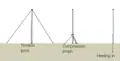
Engineering for Scouts 1 covered tension,compression,bending and torsion - the different types of force that a structure can experience. This post looks at how structures can be braced to make them stable. So, if we start with the simplest possible project, a flagpole, we will see there are three things we can do to brace it…
This is the second post in a series that will eventually comprise an activity-based, unit pioneering program curriculum. Two Half Hitches Over the Top of a Pole Forming a Clove Hitch II. In Pioneering, half hitches are everywhere! Two of them next to each other is a clove hitch , and that’s something we use time…
This is the first post in a series that will eventually comprise an activity-based, unit pioneering program curriculum. I. There are numerous terms pertaining to knots and working with rope, but the four presented here, along with some simple “moves” requiring a minimum amount of dexterity, will be useful when learning and applying some of…
The log is steadied on top of a corner block. The Atomic Pile as featured on Garden Ground Mountain in the pioneering area at the 2013 national jamboree inspired this smaller scale version which can be set up outdoors on a lawn for a troop meeting.
Getting Ready For the Toss Tying that Sheep Shank Those visiting the Pioneering Area on Garden Ground Mountain had an opportunity to find out how well and how fast they could lift a log off the ground by coiling a rope and tossing it over a crossbar, tying a Timber Hitch around a log on…
This Area Saw Plenty of Action During the building process , an area adjacent to the Hourglass Tower saw a lot of action for whipping rope and sharpening pioneering stakes. During the jamboree, it was set up for rope making, for hitching and lashing instruction, and as a display of camp gadgets.
Peschke Field featured a wide range of interactive pioneering structures and projects. In addition to bridges, towers, catapults and the camp gadget/skills area, Scouts and Venturers could experience the following Pioneering Games and Activity Stations: CHALLENGING FUN Atomic Pile Like all good team building challenges, the “Atomic Pile” requires concentration, cooperation, and strict attention to…
3 Display Towers Small Towers, Large FUN! Three signal towers (14′ Double Ladder, Hourglass, and Stilt Tower) were presented in what was referred to as “Tower Town” in the pioneering area up on Garden Ground Mountain during the 2013 national jamboree.
From left to right: 14′ Double Ladder Signal Tower, Hourglass Tower, Stilt Tower, AT&T “Signal” Tower, 4′ x 4′ x 5-1/2′ Climbing Tower, 5-1/2′ x 5-1/2′ x 4-1/2′ Climbing Tower Six towers were featured in Peschke Field . Four were for display and two were for climbing.
After a supply of bamboo was used for the gateway to Peschke Field up on Garden Ground Mountain, a team of Pioneering staff received the inspiration to use most of what was left over to comically copy one of AT&T’s nearby cell towers.
Stilt Tower Display in the Pioneering Area on Garden Ground Mountain Pioneering Staff Member Surveys the Progress around Peschke Field Of the four display towers featured in Peschke Field at the 2013 National Jamboree, the Stilt Tower was the second to be constructed, hoisted, and anchored.
Hourglass a.k.a. Pyramid Tower, erected next to the Camp Gadget / Skills Instruction area. Hourglass Tower Display: Rope Ladder Side The Hourglass Tower in the 2013 National Jamboree Pioneering Area was set up as one of four tower displays. “The Hourglass Tower is something of a classic for Scout pioneering.
Left to Right: Crossing Single A-Frame Bridge / Building Single A-Frame Bridge / Crossing Prestressed Triple Walkway Bridge / Crossing Double A-Frame Monkey Bridge The bridges featured in the pioneering area of the 2013 National Jamboree were a modified Double A-Frame Monkey Bridge , a specially designed pre-stressed triple walkway bridge, and two Single A-Frame Bridge s that Scouts…
The Crew on their Pre-stressed Triple Walkway Bridge After the spars were skinned and the initial supply of ropes were cut and whipped, there were about three days to build the pioneering area and batten down the hatches in readiness for the first troops to take the hike up to Garden Ground.
Modified Double A-Frame Monkey Bridge For those familiar with the traditional Double A-Frame Monkey Bridge design , a couple of noticeable modifications will be apparent from the outset. (Click on the photos for larger views.) Scout engineering is a fluid undertaking, and frequently variations are necessary.
Our Inimitable Quarter Master: Benny Poedjono waits on RIck Strong. Ropes . For thirty different pioneering projects and structures, plenty of rope had to be measured, cut, and whipped for lashings, anchors, and guy lines. We had plenty of manila and appropriate synthetic fiber rope in a variety of diameters on hand, and thanks to a…
The Pioneering Area was named Peschke Field after Adolph Peschke , who through the years had motivated and inspired so many with his high standards, creativity, and pioneering know-how. The following layout is a depiction of the pioneering projects and activities featured at the 2013 national jamboree up on Garden Ground Mountain at the Summit Bechtel…
A Triumphant Success—posing on their Single A-Frame Bridge In the Pioneering Area of the 2013 national jamboree, we put together a couple of Single A-Frame Bridge kits, so Scouts and Venturers could build this simple crossing bridge during their visit to Garden Ground Mountain.
Scouting has spread around the world (at last count, every country in the world except for 6 had active Scouts), and pioneering has spread with it, from forests to jungles to polar regions to open grasslands. This map summarises the timber Scouts use for pioneering around the world.
Camp Coker Pioneering Merit Badge Class: Single Trestle Bridge Over a Shallow Creek CLICK HERE FOR SINGLE TRESTLE BRIDGE PROCEDURE, MATERIALS, AND INFORMATION. Positioning the Trestle and Lashing both Walkway Underpars to the Trestle Transom Driving in the Pioneering Stakes / Lashing the Walkways to the Stakes Lashing the Handrails to the Trestle Legs Single Trestle…
The following text is by Adolph E. Peschke as presented in the 1998 printing of the 1993 edition of the Pioneering Merit Badge Pamphlet: Bridges are very popular pioneering projects. Essentially, a bridge consists of one or more trestles that support some sort of walkway.
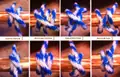
FIrst of all, the square knot (reef knot) is primarily a binding knot. That is, it’s used to secure a rope or line around an object. In pioneering, its most basic function is to commonly finish off a strop lashing , Japanese square lashing , Filipino diagonal lashing , West Country shear lashing , and both the West Country…
FULL CAMPCRAFT REVISIONS HERE Page 304 , Tarps, top right drawing — INCORRECT: Use a pair of actual photos illustrating a double half hitch at the grommet and a correctly illustrated double half hitch to secure the stone! (These photos are accurate): TOOLS Chapter 12, Page 378 , improve the illustrations — I’ve got excellent action photos that are…
Highwayman’s Hitch This is a neat quick-release knot that can hold a considerable strain. It’s also known as the fireman’s hitch and the highwayman’s hitch. Though there is no verifiable evidence that it was ever used by robbers on horseback to unhitch their horses for a quick getaway, it is ideal for reliably securing a…
Put it together, lift it up, and tie it down! Several Scoutcraft skills come into play in order to successfully complete this Simple Flagpole challenge. Each patrol flies their patrol flag from a 14′ flagpole they construct using the following materials: 4 Scout Staves (or 3 Scout Staves if their patrol flag is already tied…
Though there have been some changes and modifications through the years, in most respects, pioneering in the Boy Scouts remains constant. Why Pioneering! The following text has been extracted from the Introduction to the 1981 Printing of the 1974 Revision of the BSA Pioneering Merit Badge Pamphlet.
Patch from Schiff Back in the spring of 1976, while walking through the Mortimer L. Schiff Scout Reservation , then the BSA National Training Center, there was a memorable encounter with a tall man. Seeing the young Scouter, the tall man figuratively embraced him with a smile, warmly acknowledging the younger man like they were lifelong…
Scaffold Hitch rigged with a Bowline Bundles of 4′ Spars The scaffold hitch is a superb knot, and in pioneering easily serves a dual purpose. Primary Role : This is a seriously good knot to use in the construction of a pioneering project bosun’s chair ( boatswain’s chair ) for a small, straight aerial runway adaptation or a…
Because it’s FUN! As John Thurman so succinctly states: “Why Pioneering? To me the overriding reason for presenting Pioneering is that boys like it.” We know with certainty that the majority of Scouts do like pioneering, and the better they get at it, the more they like it.
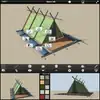
Most of the drawings on this blog have been created using SketchUp, a great, cheap 3d modeling program for Windows and Mac. There have been a few attempts to make an equally intuitive modeling app for tablets, and I think Autodesk have something very capable in their new app, Formit .
Timeless Attraction. The Mission and Purpose of the Boy Scouts of America are and shall forever remain unchanged. By the same token, the contribution that our heritage of outdoor skills makes to the richness of the Scouting experience is also unchangeable.
Water Knot The following text is by Adolph E. Peschke as presented in the 1998 printing of the 1993 edition of the Pioneering Merit Badge Pamphlet: Water Knot What could be simpler than tying two overhand knots to form a water knot?
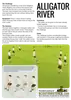
Give this pioneering-themed game a try. An alligator infested river, a few Scout staves and some ropes, one Scout must get across the river without feeding the alligators! Click the image to see full-sized alligator river game as a PDF file Alligator River Pioneering Game
At most Scouting events, there isn’t a permanently-installed, tall, metal pole for raising and lowering the colors. During opening ceremonies at these Scout gatherings, a tall flagpole made by joining long spars together can impress and inspire. Opening Ceremony at a District Camporee What is meant by tall?
Gateway to the Boy Scout Camp Pioneering Area Using the 14′ Double Ladder Signal Tower as a point of reference, here are the plans for a very tall campsite gateway that stands out (and up) and serves as an impressive feat of Scout engineering.
Double Platform Monkey Bridge It’s a pretty safe to say most Scouts love to climb things. So, it makes sense that if a monkey bridge is combined with something to climb on, it will be even more fun. The challenge in constructing a project like this is to assure the structure can safely support not…
The pipe hitch has a variety of uses, but it really comes in handy for pulling out those pioneering stakes that were driven in deeply to maximize the holding power of the anchors. Using the pipe hitch for this purpose can eliminate a good deal of straining, banging, and possible damage when it comes time…
Simple 1-1 Anchor with rope tackle We apply a rope tackle, (also known as the trucker’s hitch, lineman’s hitch, load binder, and harvester hitch) where the guy lines meet the anchors for pretty much all our pioneering projects. For safety reasons, taut-line hitches should never be used in any pioneering work, because if the tension…
When I was first learning my lashings, it always seemed that finishing them off gave me no end of trouble. It says in the book to secure with a Clove Hitch, but whenever I tried to tie a Clove Hitch the way the book described, it always ended up with too much slack and my…
Ah, the clove hitch. It’s a simple way to attach a rope to a pole, it’s side-to-side adjustable and is frequently used to start and finish a variety of lashings. Some folks don’t like it because in various applications, it’s not the most secure or reliable choice.
Each of these three lashings can be used to join two spars together to make an extension. With each there are no frapping turns. The manner in which these lashings need to be applied results in the spars being in a position where they are already tightly touching.
What one tool could help the adults end their losing ways? If anything can, it's The Boy Scout Handbook . For the first time this season, the adult challengers on Are You Tougher Than a Boy Scout? were shown with copies of the preeminent Scouting text before embarking on their first challenge against the Scouts.
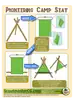
This infographic was generously provided by reader and listener Roger Thor Roop – Thank's Roger! Click the infographic to see full size. pioneering chair Pioneering Camp Seat Infographic
As always, in all Scouting activities, safety must come first. In and through the challenges, fun, and rewards that go hand in hand with Pioneering, there can be no substitute for prudent behavior and common sense. The following text is by Adolph E.
Our Favorite Clothing Rack Design You’ve got to love this design. It’s compact, it’s sturdy, and it’s ingenious! This drying rack is based on suspending two equilateral triangles to make six cross sections for hanging wet clothing or towels during a long term encampment, and there’s no reason you can’t put it up on an…
Rope Ladder Attached to a Tree The kind of rope ladder referred to here is constructed using two lengths of rope and short spars (3′ x 2″ are ideal) to serve as ladder rungs. To easily and effectively attach the rungs to the ropes, a marlin spike hitch, also known as a lever hitch can…
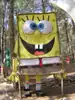
These incredible pioneering structures built by Israeli Scouts are a real inspiration( here's the website ). Obviously a lot of planning and modeling went into creating projects on this scale. It looks like a tremendous amount of fun doesn't it? I'll have to show my Scouts these pictures – who wouldn't want to build a giant Spongebob…
Whoever said "less is more" apparently hasn't watched Episode 2 of Are You Tougher Than a Boy Scout? Tonight's episode of the new National Geographic Channel show was, to me, superior to Episode 1 because it gave us more of what we Scouters and Scouts love about the Boy Scouts of America.
Team Building should be FUN! What we’re doing here is challenging each patrol to build a device that will set off and “catch” a cocked rat trap (the snapper) placed 15′ away. The lashings have to be tight and well-spaced.
HalfEagle uses Google Analytics cookies to count visits to each page. Is that OK?